
Mobile Viewing / Viewing on a small screen
Viewing this website on smaller screens will disable the table information. To view this data please view the site on a desktop computer or rotate your device to landscape.

Flowers
Blackberry
(Rubus fruticosus)

Summary
| Order | Family | Sub-Family | Genus |
|---|---|---|---|
|
(Rosales) |
Rose Family
(Rosaceae) |
Brambles
(Rosoideae) |
(Rubus) |
Overview
A very recognisable plant from its prickly limbs and fruit. Blackberry or bramble is widespread in every part of the UK and grows in hedgerows, and scrub land. Its limbs grow and root when they touch the ground to spread extensively. The fruit is easy to harvest, and the leaves can be used to make a tea. The limbs can be used for making cordage from the inner layer. Knowing how to tackle the thorns to get to the limbs isn’t too difficult.
Because of its abundance and uses this is a very good plant to get to know and use.
There are hundreds of microspecies of bramble and a lot in the genus of Rubus.
Click below for more information of individual species at Plants For A Future website (PFAF.org)
Gallery and Identification


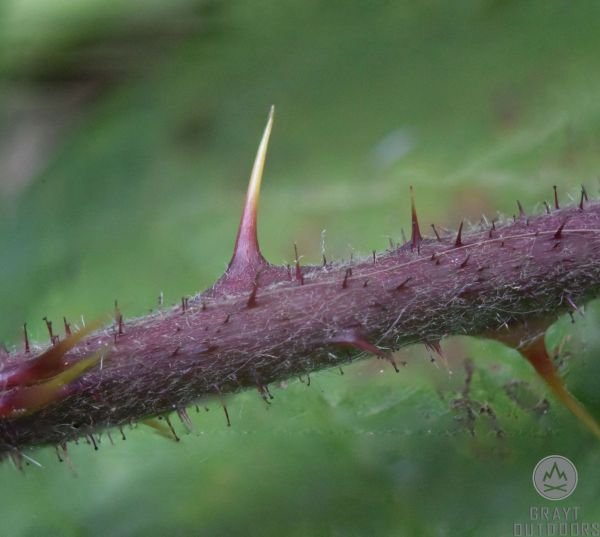
Leaves - Oval with jagged edges. In groups of 5 or 7. Fruit - Blackberries!! The immature fruit starts green and turns red to black as it matures. Flowers - Red or white. 5 petteled, a couple centimeters across. Stems - Can vary in size from 1m up to a few centimeters. Full of thorns and prickles. Size - They can grow up to 2m and cover large areas of ground.
Resources
- Cordage
- Limbs can be made into baskets
- Tea
Skills
- Cordage
Food
- Fruit