
Mobile Viewing / Viewing on a small screen
Viewing this website on smaller screens will disable the table information. To view this data please view the site on a desktop computer or rotate your device to landscape.

Flowers
Thistle
(Carduus)

Summary
| Family | SubFamily | Tribe |
|---|---|---|
| Daisy/Sunflower Family
(Asteraceae) |
Thistle Subfamily
(Carduoideae) |
Cynareae
(Cynareae) |
Overview
There many genera that are known commonly as thistle with in the Cynareae tribe.
They are many and varied the most commonly recognised in the UK being the common thistle, slender thistle, spear thistle, meadow thistle etc. These all have very similar characteristics. i.e. purple flowers, generally spiney with long, thin, uneven leaves. There are however, a number of species that do not conform to these characteristics. Chicory, for example is part of this tribe. It has blue flowers and is not spiney.
There are a number of edible species of thistle.
General Info
| Description | Data | Notes |
|---|---|---|
| Season | Biennial | Flowers June-Aug |
| Edible | Yes | Preparation is required but root, leaves, seeds and flower buds can be eaten. (see below) |
| Uses | Low | Some parts can be used as tinder (down and some seeds) |
Gallery and Identification
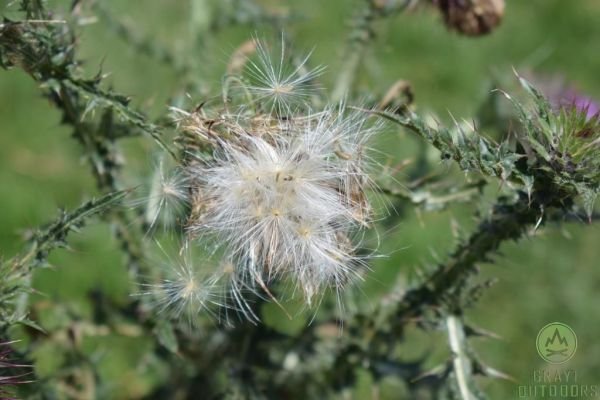


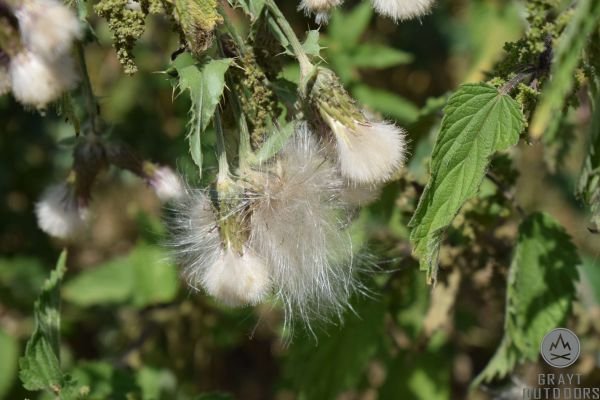


Size - Up to 2m. Stem - Spiney in a lot of species but not always the case. Leaves - Generally long and thin with an uneven edge and usually lobed. Reproductive Parts - Have both male and female organs. Flowers vary in colour from species to species - purple, yellow, blue. Distribution - Widespread. Prefers moist soil. Distinguishing Features - A favourite plant of wasps and six-spot burnets (pictured below)
Resources
- Tinder
Food
- Root - cooked. Can be dried and stored.
- Leaves - young leaves are edible but spines require removing.
- Seeds - roasted.
- Flower buds - cooked.