
Mobile Viewing / Viewing on a small screen
Viewing this website on smaller screens will disable the table information. To view this data please view the site on a desktop computer or rotate your device to landscape.

Trees
Lime
(Tilia)

Summary
| Order | Family | Genus |
|---|---|---|
| Malvales
(Malvales) |
The Mallows Family
(Malvaceae) |
Lime
(Tilia) |
Overview
There are around 30 species of which around 8 grow in the uk (and some of these are hybrids).
The common English names include lime and linden. The tree is completely unrelated from the citrus fruit.
I cannot find any sources with reference to the origin of the name, however the latin name Tilia looks to have links to the meaning "to obtain" or "to get, cultivate". This would make sense as this tree has many uses. It was known by the Romans as "the tree of a thousand uses".
Lime attracts large amounts of aphids which in term produce a lot of sap. This drips from the tree leaving anything underneath covered in a sticky layer if left long enough. (i.e. overnight).
The wood is soft and is well-known as being good for carving. It has had many past uses some example include piano sound boards and keys, cutting blocks, charcoal was used for gunpowder, agricultural implements, and beehive frames. The inner bark, once prepared, can be used to make strong cordage and has been used in fishing nets and strong ropes.
It is mostly used for turning and carving in recent times. Tea made from its flowers is used for medicinal purposes.
Bushcraft
In my opinion one of the trees to look out for. It has many uses and they are relatively widespread and easy to identify. This is the first tree I was able to make fire with from friction, using this as a baseboard/hearth.
Click below for more information of individual species at Plants For A Future website (PFAF.org)
General Info
| Description | Data | Notes |
|---|---|---|
| Season | Deciduous | |
| Edible | Yes | See below. |
| Uses | High | "the tree of a thousand uses" (See below.) |
| Burnability | Poor | Burnsd with dull flame |
| Hardness Rating | 15 | Rough scale of hardness from 0 - 100
(Zero being the softest wood and one hundred being the hardest) |
Gallery and Identification


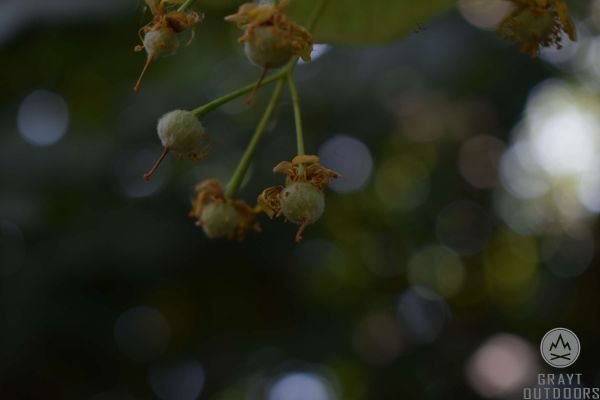


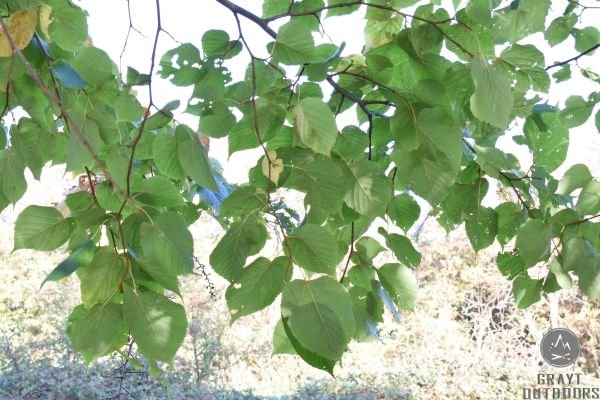


Features common to majority of species:
Size - Species variation - 46m to m (Common Lime (Tilia x europaea) to American Basswood(Tilia americana ))
Bark - The bark of lime trees can vary a lot between species. It is generally grey/brown, however it's texture can be smooth or finally fissured/ ridged depending on the species. If you suspect you have a lime from some of the other features of the tree you will need to do further investigation to identify the exact species. (Lime has some quite easily identifiable features; depending on the season).
Leaves - In general the leaves are heart-shaped and often asymmetrical. They have a toothed edge to varying degrees between species. Generally quite dull-green on top and paler on the underside.
Reproductive Parts - Yellow/white petaled flowers grown in small clusters. The fruit of a lime tree a hard brown and up to 6 mm in diameter. They hang in small clusters from halfway down what looks like a slender modified leaf (the whole thing is in fact the fruit).
Root - Not often exposed.
Distribution - Can be found in most of the northern hemisphere in temperate regions.
Surroundings - Woodlands. Often found in streets and parks.
Misc - Lime trees produce a lot of sap from attracting aphids which drips from the tree This is often noticeable if you park under one as, if left overnight your car is covered and it's time to get a bucket and sponge out.
Resources
- Cordage
Skills
- Firemaking
Food
Fruit Sap Young Leaves Flowers Believed to have some medicinal uses