
Mobile Viewing / Viewing on a small screen
Viewing this website on smaller screens will disable the table information. To view this data please view the site on a desktop computer or rotate your device to landscape.

Trees
Oak
(Quercus)

Summary
| Order | Family | Genus |
|---|---|---|
| Fagales
(Fagales) |
Beech Family
(Fagaceae) |
Oak
(Quercus) |
Overview
Oak is in the Beech family and there are over 600 species. It has both deciduous and evergreen species.
Pedunculate (Common/English) is by far the most common species in the UK and Its a large tree and is easily identifiable by its lobed, spirally arranged leaves, and the appearance of acorns in summer. It is one of the best know English trees.
Pedunculate Oak is widespread throughout England and Wales, and around the boarders of Scotland. It's also widespread throughout Ireland aside from the west coast. Sessile Oak is the 2nd most common and the largest species. It is also widespread throughout the UK but not as common as pedunculate.
Oak is the most widely-used hardwood in the UK. The Latin name of Pedunculate is Quercus robus. Quercus simply means Oak and robus translates as strength, strong, support, or toughness. It was traditionally and most famously known in the use of shipbuilding. It's an excellent timber that is still used today. Oak is also known for its use in furniture, veneers, flooring, and alike.
Oak has an important role in wildlife. It's home to hundreds of moth species and the breeding ground for certain types of wasps that lay eggs in developing leaves leading to Oak Galls. Galls can be used to make inks and also to ID an Oak. Oak continues to play a part in the ecosystem once it has died, supporting life in the form of fungi and wood-boring beetle larvae.
Bushcraft
Oak has a dense wood which is useful for building and burning. Acorns can be eaten, once prepared correctly.
Click below for more information of individual species at Plants For A Future website (PFAF.org)
General Info
| Description | Data | Notes |
|---|---|---|
| Season | Deciduous and Evergreen | There are a group of trees in the genus refered to as 'live oaks' and these are everygreen. The rest are deciduous. |
| Edible | Yes | See below. |
| Uses | See below. | |
| Burnability | Good | Burns well due to its density. Best if seasons for at least 2 years. |
| Hardness Rating | 30-50 | Rough scale of hardness from 0 - 100
(Zero being the softest wood and one hundred being the hardest) |
Gallery and Identification
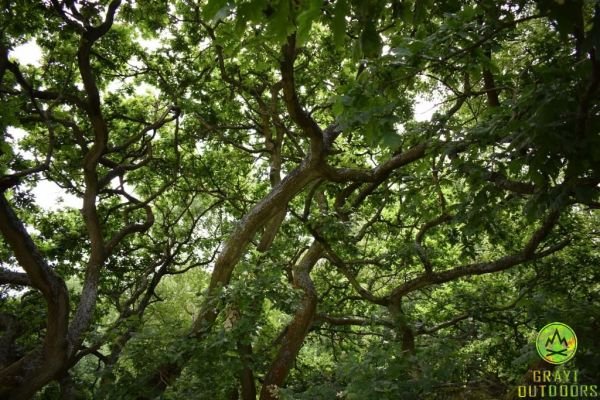
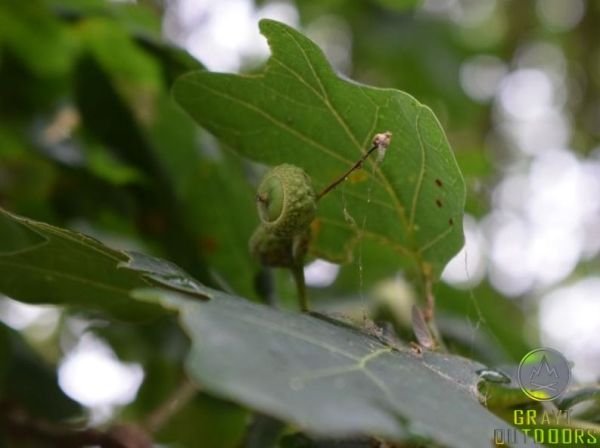
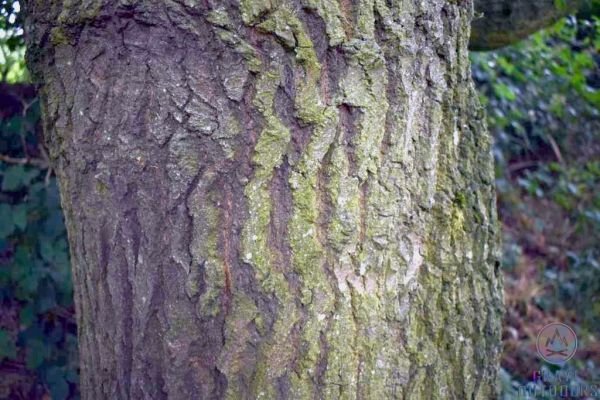
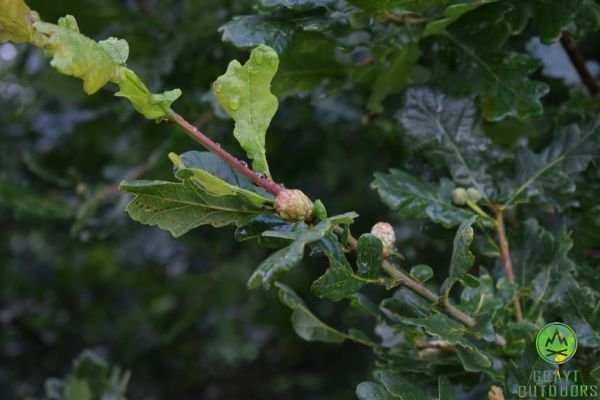
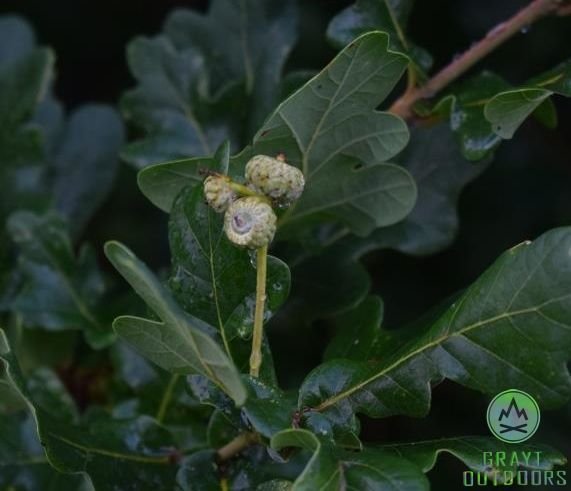
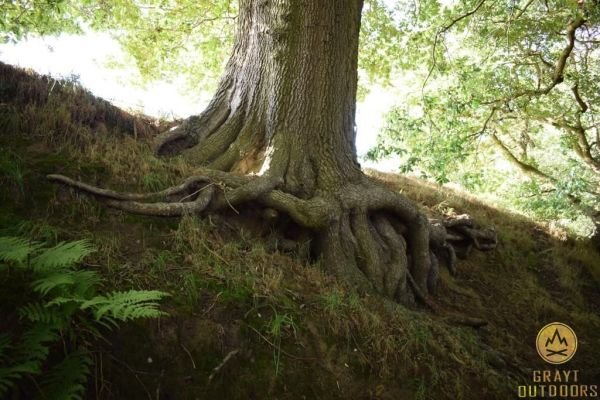
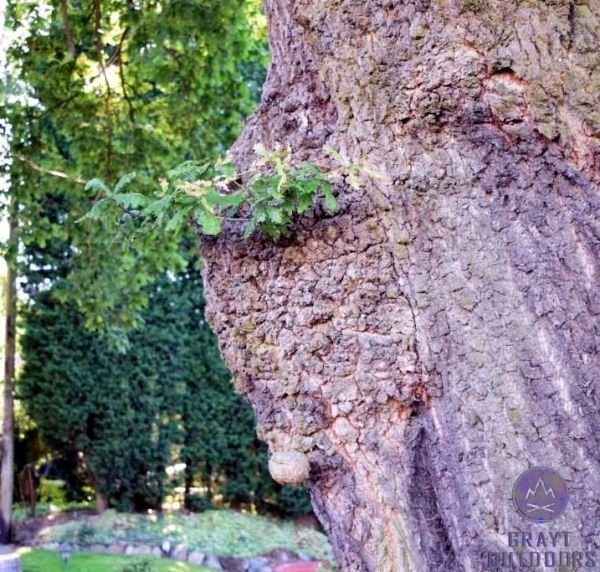
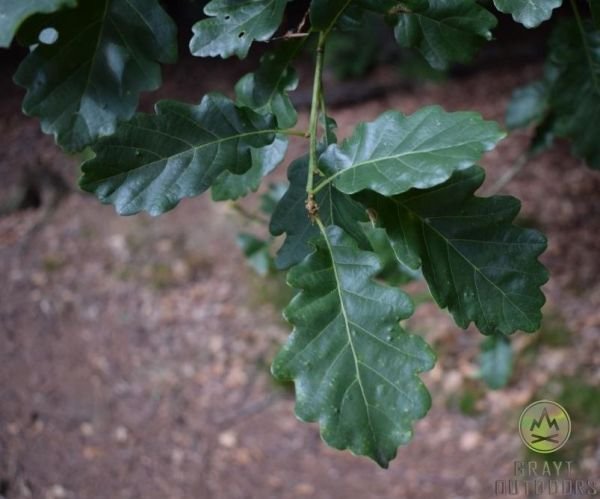
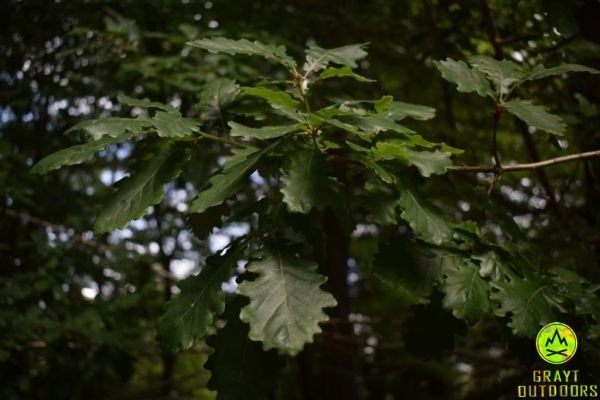
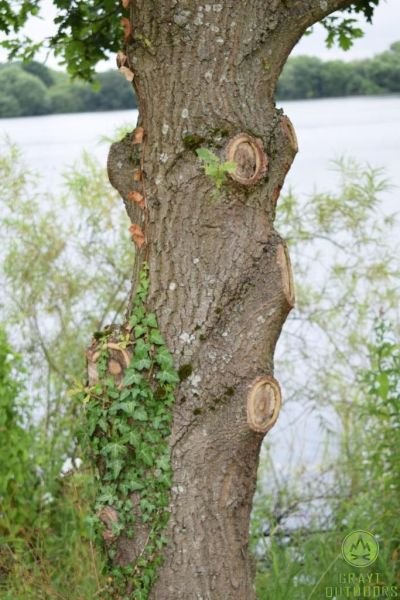
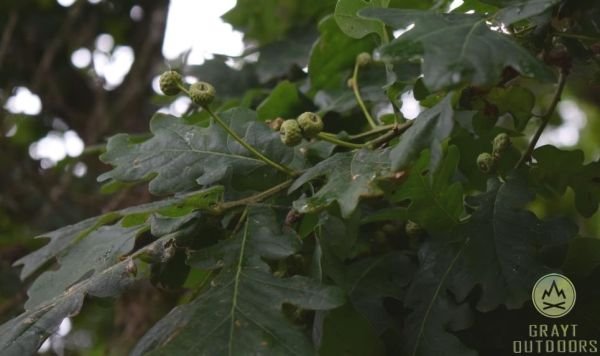
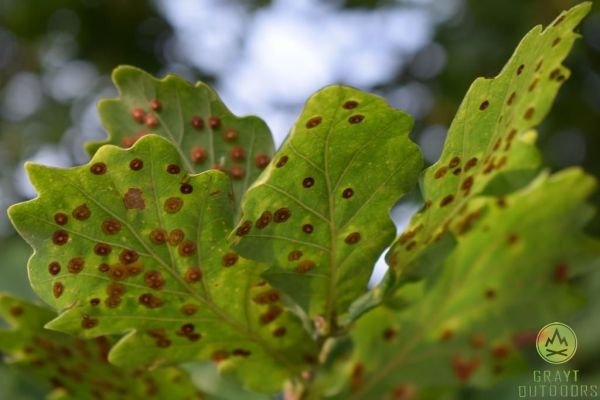
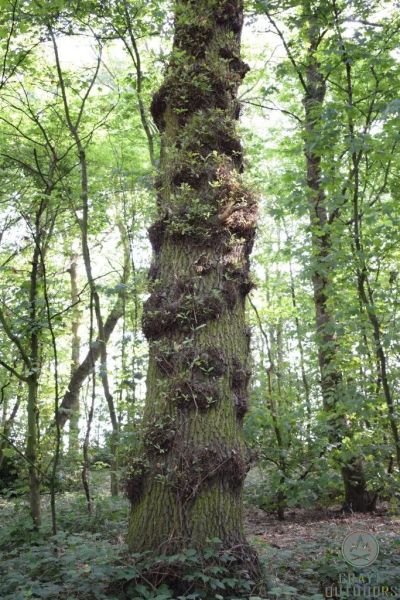
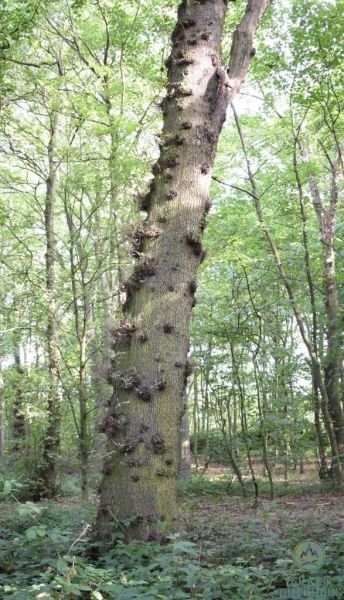
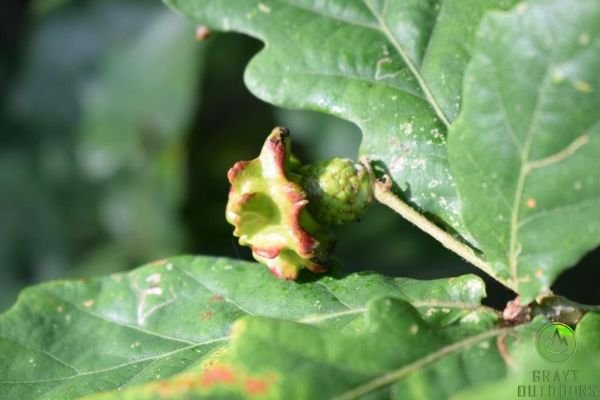
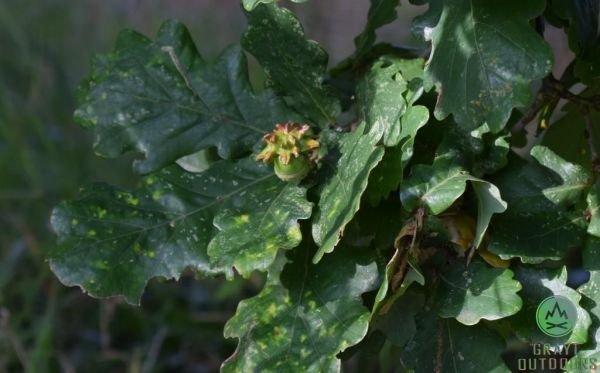
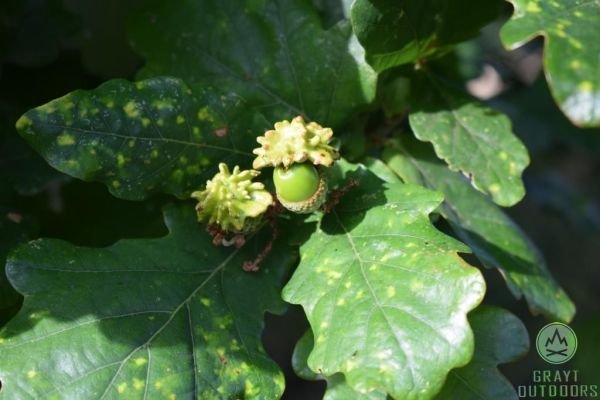
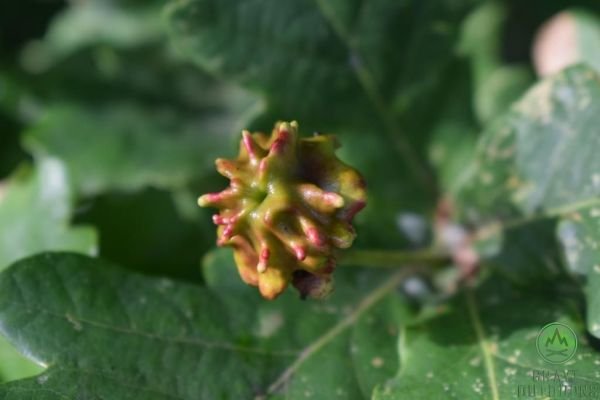
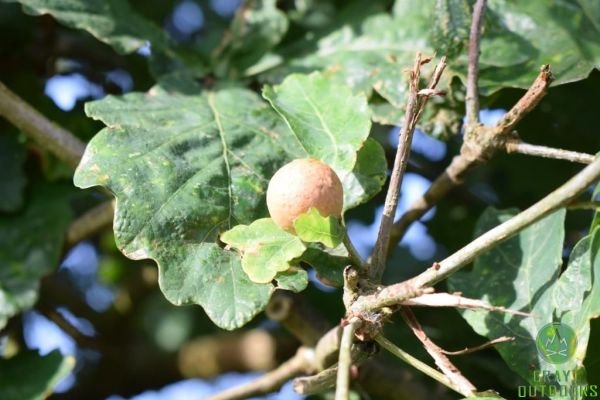
Features common to majority of species:
Size - Species variation - 5m to 40m (Kermes Oak (Quercus coccifera) to Sessile Oak (Quercus petraea))
Bark - Grey and fissured in mature trees. Can take on a greenish colour from mould growing on the surface.
Leaves - Deeply Lobed and dark green.
Reproductive Parts - They produce both male and female flowers in the spring, in the form of catkins and small female flowers. They produce acorns in the summer.
Distribution - Found all over the UK.
Distinguishing Features - Many are very large and imposing trees. Often displaying an array of colours in the autumn months as the leaves die back.
Resources
- Firewood
- Building material
Food
- Acorns - Raw acorns conatain tannins which can be toxic to humans. They can be consumed after preparation involving blanching and leaching the nuts in water.